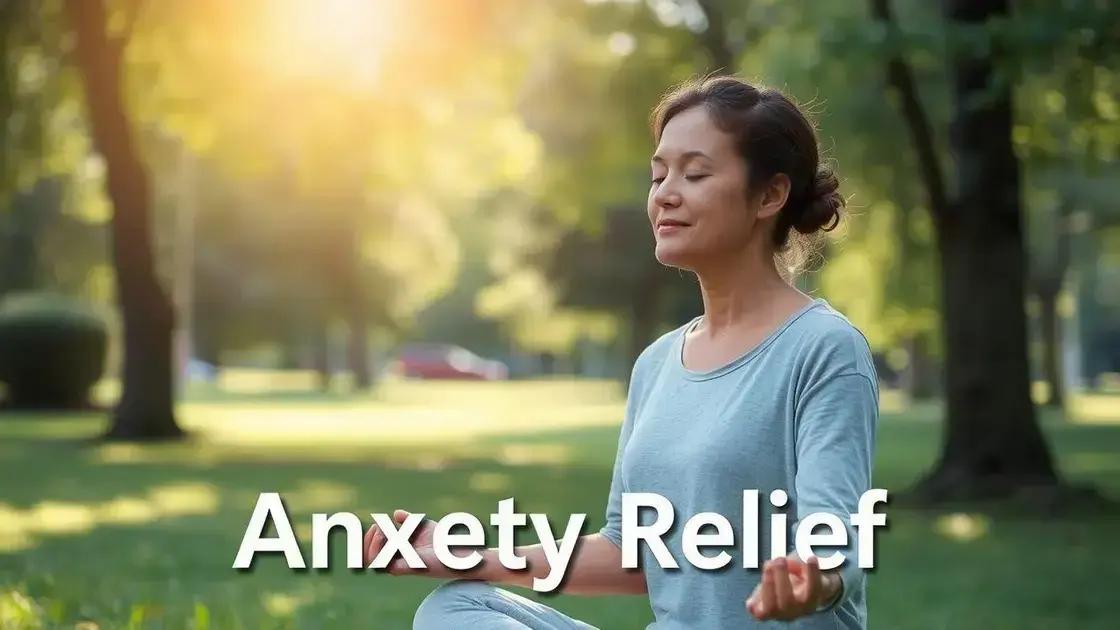
Managing anxiety effectively involves understanding triggers, developing coping mechanisms, and integrating mindfulness and relaxation techniques into your daily routine for improved mental health.
Anxiety can sneak into our lives and take a toll on our well-being. Have you ever wondered how it silently affects your everyday activities?
Understanding anxiety begins with recognizing that it is a normal response to stress. It can manifest in various ways, such as feelings of unease, worry, and fear. This condition can significantly impact our daily lives, affecting our ability to work, socialize, and even enjoy personal time.
Types of Anxiety Disorders
There are several types of anxiety disorders, including generalized anxiety disorder, social anxiety disorder, and panic disorder. Each presents unique challenges for those who experience them. For instance, while general anxiety involves persistent worry across various situations, social anxiety is specifically related to fear of social interactions.
The Physical Effects
Anxiety does not just affect the mind; it can also lead to physical symptoms such as increased heart rate, sweating, and even gastrointestinal issues. Understanding these physical responses can help individuals better recognize when they are feeling anxious.
Emotional and Behavioral Impacts
Emotionally, anxiety can lead to feelings of isolation and helplessness. Individuals may avoid situations that trigger their anxiety, which can further exacerbate feelings of loneliness. It’s essential to understand how these emotional and behavioral patterns develop to find effective ways to manage anxiety.
Learning about anxiety and its effects empowers individuals to seek help and adopt strategies that promote well-being.
Identifying triggers and effective coping mechanisms
Identifying triggers for anxiety is crucial in managing your mental health. Triggers can be situations, people, or even thoughts that provoke feelings of anxiety. Recognizing these triggers can help you take control of your response and reduce their impact on your daily life.
Common Triggers
Some common triggers include stressful work situations, family dynamics, and major life changes. By keeping a journal or log of your feelings, you can start to see patterns and identify specific triggers that lead to anxiety.
Coping Mechanisms
Once you identify your triggers, it’s important to develop effective coping mechanisms. Simple techniques such as deep breathing, physical exercise, and talking to a friend can help ease anxious feelings. Engaging in activities that you enjoy can also provide relief and improve your mood.
Mindfulness and Relaxation Techniques
Practicing mindfulness, such as meditation or yoga, can help ground you in the present moment. These techniques promote relaxation and can significantly reduce feelings of anxiety. Regular practice can build resilience against future triggers.
Implementing these strategies requires time and patience but can lead to significant improvements in your overall mental health. With awareness and the right tools, managing anxiety becomes an achievable goal.
Creating a personalized wellness routine
Creating a personalized wellness routine is essential for managing anxiety effectively. A routine that fits your lifestyle can enhance your overall well-being and reduce feelings of stress.
Assessing Your Needs
The first step is to assess your unique needs and preferences. Consider your daily schedule, your current stress levels, and what activities you enjoy. This assessment will help you create a routine that is both enjoyable and beneficial.
Incorporating Physical Activity
Regular physical activity is a powerful way to manage anxiety. Aim to include at least 30 minutes of exercise a day, whether it’s walking, dancing, or practicing yoga. Find activities that you love, making it easier to stick to your routine.
Mindfulness Practices
Including mindfulness practices in your wellness routine can help calm your mind. Techniques like meditation, deep breathing, and guided imagery can reduce anxiety. Try to dedicate a few minutes each day to practice these techniques, gradually increasing the duration as you become more comfortable.
Nutrition and Sleep
Paying attention to your nutrition and sleep patterns is also important. A balanced diet rich in fruits, vegetables, and whole grains can affect your mood positively. Aim for 7-9 hours of quality sleep each night, as insufficient sleep can worsen anxiety symptoms.
Creating a personalized wellness routine tailored to your needs can lead to lasting benefits for your mental health. Remember to adjust your routine as needed and stay consistent for the best results.
Integrating mindfulness and relaxation techniques
Integrating mindfulness and relaxation techniques into your daily routine can significantly reduce anxiety and improve your overall mental health. These practices help you stay grounded and present, allowing you to manage stress effectively.
What is Mindfulness?
Mindfulness is the practice of being fully present in the moment. It involves focusing on your thoughts, feelings, and surroundings without judgment. Taking a few minutes each day to practice mindfulness can greatly enhance your emotional well-being.
Simple Mindfulness Techniques
To integrate mindfulness into your life, start with simple techniques like deep breathing exercises. Sit quietly and pay attention to your breath. Inhale deeply through your nose, hold for a moment, and exhale slowly through your mouth. Repeat this for several minutes.
Relaxation Techniques
Incorporating relaxation techniques such as progressive muscle relaxation or guided imagery can also help. In progressive muscle relaxation, tense each muscle group for a few seconds and then relax it, helping to release tension throughout your body.
Creating a Mindfulness Routine
Consider setting aside specific times each day for mindfulness and relaxation practices. Whether it’s in the morning or before sleeping, having a consistent routine can help you stay committed. Small, consistent actions can lead to significant improvements in your anxiety management.
By integrating these techniques into your daily life, you can create a peaceful space for yourself and better navigate the challenges of anxiety.
In Summary: Managing Anxiety for a Healthier Life
Managing anxiety is a journey that requires patience and commitment. By understanding anxiety and its triggers, you can develop effective coping mechanisms and create a personalized wellness routine.
Integrating mindfulness and relaxation techniques into your daily life can help you find peace amid challenges. Remember, it’s important to take small steps and find what works best for you.
With the right tools and practices, you can regain control over your anxiety and improve your overall well-being. Always remember, you are not alone, and support is available when needed.
FAQ – Frequently Asked Questions about Anxiety Management
What are common triggers for anxiety?
Common triggers for anxiety can include stressful situations, major life changes, social interactions, and certain environments that provoke feelings of unease.
How can mindfulness help with anxiety?
Mindfulness helps by keeping you present and focused, allowing you to manage overwhelming thoughts and emotions more effectively.
What are some effective coping mechanisms for anxiety?
Effective coping mechanisms include deep breathing exercises, physical activity, journaling, and talking to someone you trust.
How often should I practice mindfulness and relaxation techniques?
It’s recommended to practice mindfulness and relaxation techniques daily, even if just for a few minutes, to build resilience against anxiety.
What role does physical activity play in managing anxiety?
Physical activity releases endorphins, which can improve mood and reduce feelings of anxiety, making it an essential part of a wellness routine.
Can I integrate wellness practices into my busy schedule?
Yes, you can integrate short mindfulness and relaxation practices into your day, such as during breaks at work or before bed, to make them fit your schedule.